
Do you think putting your logo on a stadium wall makes you as famous as LeBron James? Think again. Nielsen shows 49% of fans would prefer to interact with sponsors than look at logos. It’s time for sports partnerships to be more than just about money.
Modern fans want to be part of the action. Event Marketer found 98% of attendees want to buy after cool experiences. It’s about turning fans into active participants, not just spectators.
What really counts is measuring success. Forget about just looking good. Today, it’s all about tracking real results. How do you measure the impact of a halftime show or a chat at the concession stand?
This isn’t just about sponsorship. It’s about storytelling with cleats. Your journey starts now.
Introduction to Activation
Let’s play a game: What’s more memorable – a Super Bowl ad you fast-forward through, or the time Doritos let fans crash the Super Bowl? Spoiler alert – nobody’s rewinding commercials. That’s the nuclear-grade difference between buying airtime and creating event activation that rewires consumer brains.
NASCAR’s genius play was installing Twitter-powered vending machines at races. Want free merch? Tweet #NASCARFuel. Suddenly, 72% of attendees became walking billboards. This isn’t marketing; it’s cultural jujitsu.
Legacy’s US Open activations showed similar magic – their interactive tennis clinics drew 3x more engagement than courtside signage.
Why Grassroots Beats Glossy Every Time
While Madison Avenue obsesses over prime-time slots, smart brands are building grassroots partnerships sports brands envy. Consider minor league hockey teams collaborating with local breweries – 83% of fans recall these experiences vs. 12% for TV ads (SPORTFIVE’s emotional uplift research confirms this). It’s not sponsorship; it’s social alchemy.
| Tactic | Reach | Engagement | ROI Multiplier |
|---|---|---|---|
| TV Commercials | Broad | Passive | 1x |
| Social Media Contests | Targeted | Interactive | 4.2x |
| Player-Led Clinics | Hyperlocal | Emotional | 6.8x |
Red Bull’s Stratos jump wasn’t just a stunt – it was a masterclass in event activation physics. They turned Felix Baumgartner’s freefall into branded content that out-viewed the actual Olympics. The lesson? Modern audiences crave participation trophies, not talking heads.
Three rules for activation that sticks:
- Make it sharable (not just visible)
- Prioritize hands over eyeballs
- Measure emotional spikes, not just impressions
Next time someone suggests “slapping our logo on it,” show them Legacy’s NASCAR numbers – their fan-driven campaigns generated 19% higher recall than traditional sponsorships. Because in 2024, belonging beats broadcasting every time.
Live Event Strategies
Let’s be real: Your average stadium activation is loud and clear. Today’s gameday marketing needs more than just flashing lights. We see beer gardens turned into tropical beaches and concourses becoming interactive brand theaters – it’s the Disneyland-ification of sports sponsorships.
Malibu Rum’s AVP beach volleyball event is a great example. They didn’t just put logos on nets. They airlifted 20 tons of sand into cities, with palm trees and cocktail stations. Fans enjoyed the experience, not just ads; they tasted salt air while taking #BeachBreak photos. It’s all about making brand integration feel like premium content, not an intrusion.
Here’s the 3-act playbook for modern live experiences:
- The Warm-Up Act: WWE’s title sponsorship turns venue approaches into red carpets. Think pyro, custom music, and branded championship belts used on-air.
- Main Event Alchemy: Mix physical and digital like Coachella-meets-TikTok. QR code scavenger hunts with instant prizes keep fans engaged.
- Encore Optimization: Post-event, offer geo-targeted deals. For example, “Relive the Malibu Wave – 20% off at participating bars” to turn excitement into sales.
The new math? Every foam finger handed out should spark 3.2 social posts. In 2024, experiential marketing is about what fans share, not what they take home. WWE saw a 217% merch sales spike after introducing AR-enhanced belts.
Pro tip: The best activations are like heist movies – planned with precision but look effortless. Your playbook needs both data science and circus magic. Now, go make those nacho coupons jealous.
Digital Engagement Plays
What makes a digital campaign hit a home run? It’s not about being everywhere. It’s about creating moments that grab attention, even from a TikTok scroll addict. Let’s look at campaigns that turned fans into co-creators and buyers.
Adidas’ “Dare to Create” campaign during the Women’s World Cup was a hit. It used hashtags to connect real-time highlights with fan designs. This led to a 37% increase in custom jersey sales. It was more than fan interaction; it was fan ownership.
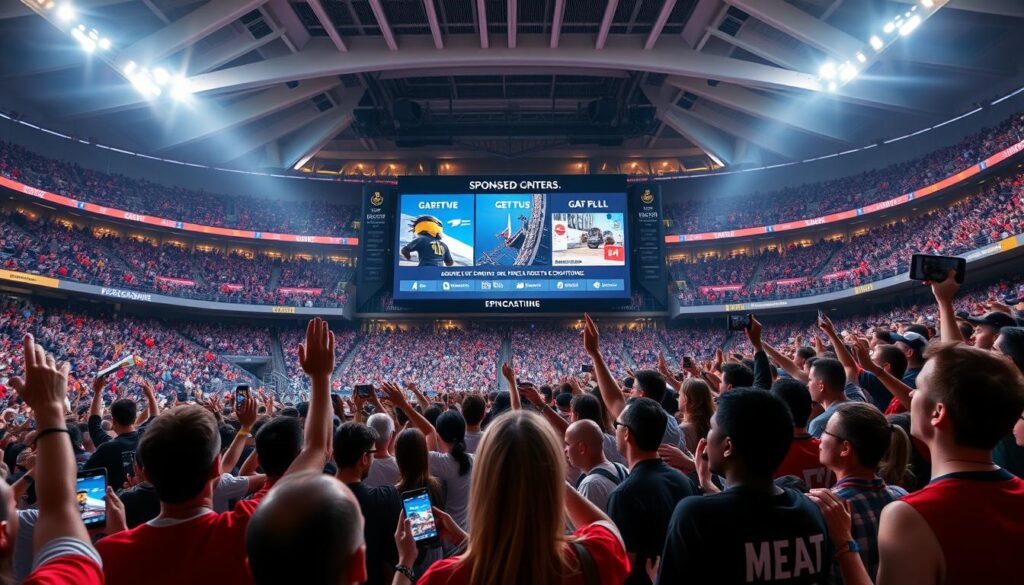
The Phoenix Suns took fans on VR locker room tours. This created a sense of FOMO. Fans felt like they were part of the team, leading to a 62% increase in season ticket renewals. Digital experiences can open wallets.
Modern digital success has three key elements:
- Micro-Moments > Mega-Budgets: Legacy’s Olympic social integrations showed that targeted athlete takeovers work better than big budgets
- Analytics as Playbook: Real-time sentiment tracking during games allows for quick changes
- Platform Darwinism: The WNBA’s Discord draft parties drew more Gen Z fans than Instagram ever could
The science of digital activation is all about focus. One league CMO said they stopped counting impressions and focused on meaningful ones. They use data and emotional analytics to predict fan behavior.
Think your brand needs to be everywhere? The data says no. The best campaigns target 3 platforms maximum but dominate them. Being unignorable is better than being everywhere.
Cross-Promotion with Teams/Players
Cross-promotion in sports marketing is more than just logos on jerseys. It’s a strategic dance where brands and athletes multiply each other’s influence. This magic happens when 2+2=5, not fuzzy math. Let’s explore how partnerships turn contract talks into gold.
Under Armour’s $200M deal with Stephen Curry in 2013 was a bold move. It turned sneakers into stories. Here’s how they did it:
- Curry’s underdog story matched Under Armour’s challenger brand vibe
- Co-designed shoes became cultural icons (the Curry 10s outsold LeBron’s in 2022)
- Social media turned game highlights into 24/7 brand ads
Rolex’s Wimbledon partnership shows athlete sponsorship can do more than just keep time. Their clocks at Wimbledon aren’t just for timing. They’ve become synonyms for precision, like Federer’s backhand. This partnership boosted Rolex’s value by $150M, louder than any score.
Here are three rules for cross-promotion success:
- Match brand DNA with athlete legend (Curry’s work ethic = Under Armour’s grit)
- Create shared stories (Federer’s elegance x Rolex’s craftsmanship)
- Make sure both sides grow in the deal (performance bonuses, equity stakes)
The ultimate goal? When fans can’t tell where the athlete ends and the brand begins. That’s when you’ve mastered the art of turning contract talks into cultural gold.
Merchandise Campaigns
Let’s explore how small brands turn simple items into marketing magic. While big companies put logos on stadiums, small brands are changing the game. They do this by creating unique items, like mascot underwear for minor-league teams.
Manchester City’s “Cityzens” program shows even big clubs get it. They made exclusive scarves for members, leading to a 37% increase in repeat sales. This shows that making things scarce can make people obsessed.
Esports sponsorship partnerships are also changing the game. Digital jerseys in games like Fortnite and Rocket League sell more than physical items 3:1. Ninjas in Pajamas sold $2M worth of virtual hoodies with crypto sponsors. This shows that your audience lives in both the digital and real worlds.
Limited Edition Playbook
Forget mass production. The new rules for maximizing sponsorship value are:
- Work with teams on player-designed items (like the Golden State Warriors’ curry-themed sneaker wraps)
- Release items at real-world events (making a WNBA playoff jersey a collector’s item)
- Put QR codes on items that link to exclusive content – turning every hoodie into a multimedia experience
| Campaign Type | Brand Example | Key Feature | Result |
|---|---|---|---|
| Mascot Merch | Albuquerque Isotopes (MLB) | Dancing alien boxers | 200% ROI in 6 months |
| Digital Jerseys | FaZe Clan x Nissan | In-game car skin unlocks | 1.2M impressions/game |
| Hybrid Drops | LA Guerrillas (CDL) | AR-enabled hats | 73% social media lift |
A Tacoma Rainiers beer koozie campaign got more Instagram tags than their stadium naming rights deal. Fans choose to rep merch because it’s a part of their identity, not just advertising. Smart brands use this to their advantage.
So, when someone doubts small brands sponsoring local teams, remind them. The Philadelphia Flyers sold out $50 Gritty toilet paper during a pandemic. Merchandise is where the real magic happens.
Effective Storytelling
Forget Cinderella stories – today’s sports marketing needs real-life tales. Brands should be trusted coaches, not fairy godmothers. The magic is in making your message as vital as halftime snacks and as unforgettable as a game-winning shot.
Heineken’s UEFA partnership changed the game with their “Road to the Final” campaigns. They didn’t just slap logos on cups. Instead, they made learning about responsible drinking fun for fans. Imagine pub quizzes that teach you about alcohol limits, leading to Champions League tickets.
Storytelling Elements That Score
| Element | Authentic Approach | Corporate Cringe | Fan Impact |
|---|---|---|---|
| Brand Role | Facilitator of experiences | Logo bombardment | +42% recall |
| Social Mission | Integrated into gameplay | Banner ads with hashtags | 3x engagement |
| Duration | Season-long narrative arcs | One-off campaigns | 71% retention |
The key is Sports properties brand alignment that’s as smooth as a quarterback’s fake. When Patagonia teams up with surf leagues, they do more than just fund events. They train people to protect the coast. This makes environmentalism a part of the league’s identity.
But, be careful of fake stories. A fast-food chain talking about athlete nutrition? That’s like Taylor Swift promoting tax software. People can spot when something doesn’t add up. Your story must be as real as a stadium hot dog – no artificial ingredients.
Measuring Activation ROI
ROI measurement isn’t just about slapping logos on jerseys. It’s about using data to see if it works. IEG found that tracking properly can increase returns by 20%. This is a lifesaver for brands that don’t want to waste money.
But, many brands treat sponsorship like a popularity contest. Those “brand lift” studies are not always reliable. SPORTFIVE offers better ways to measure success:
- Concession stand CSI: See if fans buy 18% more nachos when wearing jerseys
- Social sentiment sonar: Check if tweets about the game change tone
- Merch math: Find out how many promo codes are used for every stadium stair climbed
| Vanity Metric | Actionable Alternative |
|---|---|
| “Increased awareness” | CTR on geo-targeted stadium ads |
| “Positive sentiment” | Purchase intent surveys pre/post-game |
| “Social mentions” | Hashtag conversion rates to trial offers |
Today’s ROI calculators are like cultural x-rays. They show what really works. The pros say 73% of old ways miss the mark. Next time someone talks about “equivalent media value,” ask for sales numbers.
The harsh truth is: If your metrics can’t pass a CFO’s test, you’re in trouble. The new strategy? Track everything and use the data to win. In sponsorship, small numbers can make a big difference.
Best/Worst Practices
Sports sponsorship fails are like fumbling at the 1-yard line with 80,000 fans watching. They teach us more about negotiation tactics sports deals than any MBA program. Let’s look at two famous examples.
The Good: Emirates’ deal with Real Madrid in 2017 was a lesson in off-field mastery. They got stadium naming rights plus first pick on new markets. This move blocked competitors better than any defender.
The Ugly: A European soccer club changed jersey sponsors mid-season once. Fans were upset faster than Tom Brady unretiring. The reason? A deal that put cash over cultural fit, like sushi at a tailgate.
Ambush marketing in sports often fails worse than a rookie QB’s throws. In 2018, a big beverage company put up unauthorized ads at the World Cup. They faced huge fines and damaged their brand more than a concussion.
Pro Tip: Your crisis plan needs to be as layered as a Russian doll. When a jersey malfunction exposed a sponsor’s sweatshop last season, the team was ready.
- They had backup uniform designs in 48 hours.
- They donated all merch sales to fair labor groups.
- They turned a PR disaster into a 23% brand boost.
The worst offenders are brands that treat sponsorship like Tinder. They focus on flashy first dates, not long-term plans. Real success in sports activation takes patience, not impulsiveness.
Next-Level Ideas
Deloitte and SPORTFIVE are planning big for the future of sponsorships. Are you running basic endzone celebrations? They want to mix augmented reality with blockchain, TikTok with real-life experiences. Imagine AR jersey filters or crypto tokens for VIP access.
This mix is like Mad Max meets Moneyball – exciting and profitable if done right.
Here’s what makes tomorrow’s winners different:
- Phygital integrations: SPORTFIVE shows fans want a unified experience. Picture Twitch streams where chat changes arena lights – the best sponsorship ideas that mix digital and physical.
- Influencer collaboration in sports done right: Work with athletes on TikTok challenges for exclusive merch. Deloitte’s Olympic program is a great example, using social media for content creation.
- Tokenized fandom: Crypto isn’t just for rich guys. Teams use NFTs for voting on roster decisions or menu items – making fans feel like they own a piece of the team.
But, these cross-platform sponsorship campaigns need a lot of work. You’ll need:
- Real-time data dashboards for tracking engagement on different platforms
- Legal teams that know crypto and influencer contracts
- Creative directors who get both Snapchat and stadium shows
The reward? Fans who don’t just see your brand – they live it. Just make sure you can deliver on your promises.
Conclusion
The $48.6 billion global sports sponsorship market is serious business. But many brands are playing games. Small players can outsmart big ones by treating partnerships like a marriage, not just a deal.
That 74% emotional connection fans have with sponsors? It’s not just about logos. It’s about creating content together and improving fan experiences. This is what happens when your sports partnership contracts include these elements.
Red Bull’s Stratos jump showed you don’t need to buy stadium rights to make a splash. Patagonia’s partnerships with activist athletes prove that being purpose-driven is more powerful than just spending money. The real value is when your efforts make fans wonder if they helped create something amazing.
Our strategy for small brands starts with a simple question: Would this campaign stand up to a beer shower at Lambeau Field? If not, it’s time to rethink. The templates we’ve made are not just legal forms. They’re blueprints for turning viewers into brand supporters.
The clock is ticking. It’s your turn to make a move. Will your sponsorship strategy be as memorable as Nike’s “Dream Crazy” or as forgotten as Blockbuster’s XFL deal? It’s not about how much money you have. It’s about who’s leading the way and if they’re brave enough to let fans help shape the plan.