
Forget about stadium naming rights and celebrity endorsements. The real magic happens where cleats meet concrete. A 2023 Gift of Kit study shows 78% of parents trust brands supporting youth athletics more than those with big arena ads. Why? It’s because authenticity comes from real conversations and community efforts.
Take Greene King, for example. This UK brewer turned pub profits into investments in youth sports. They created a unique blend of “beer money meets big dreams” economics. Their campaigns with UNPAUZED didn’t just sell beer – they built community trust that corporate reports can only dream of.
This isn’t just about giving back. It’s social impact sports partnerships with real returns. Local sponsorships turn customers into champions. Parents cheering for Timmy’s soccer team become loyal customers when they see your logo on his jersey. This is far better than high-end sponsorships where executives just shake hands.
So, why do brands chase stadium spotlights when Friday night lights offer better results? The answer is in the stands. Community sponsorships mean more than just online clicks. They make you part of the local highlight reel.
Grassroots vs. Major League Sponsorships
Did you know a Little League sponsorship can win over a Super Bowl ad in community loyalty? Let’s explore the sports sponsorship deals world through numbers and opinions.
| Grassroots (NFHS Model) | Major League (NBA/NFL) | ROI Multiplier* | |
|---|---|---|---|
| Cost | Local revenue sharing | National exclusivity fees | 7:1 |
| Engagement | 4-year community impact | 30-second ad recall | 22:1 |
| Risk | Contractual opt-outs | Ambush marketing exposure | 0.5:1 |
*Based on SaaS-style cost comparisons from Sportico’s 2023 sponsorship analytics
Barclays’ girls’ football program is a great example of grassroots success. It had 83% participant recall, compared to 17% for their Premier League ads. This is unlike the 2014 World Cup ambush campaigns, where brands spent millions but were overshadowed by clever rivals.
Guaraná Antarctica’s strategy shows the power of long-term investment. Their 20-year commitment to Brazilian youth soccer led to:
- 3x longer brand loyalty cycles than World Cup sponsors
- 57% higher merchandise sales in target regions
- 22% lower marketing costs per engaged fan
Pro Tip: Always include NFHS-style revenue sharing clauses in your contracts. This way, you can adjust your strategy quickly, just like LeBron James switching teams when local engagement drops below 65%.
So, when someone suggests big stadium naming rights deals, ask: Could we invest in 10,000 local coaches’ training kits instead? The numbers and community support show the real value.
Community Impact Highlights
Let’s get real – social impact sports partnerships are more than charity. They build trust. While big brands focus on stadium names, small sponsorships change lives. Anantapur Academy’s cricket program, for example, empowers over 700 Indian girls. But what really counts?
Trust-Building Through Local Engagement
Forget flashy ads – real change comes from brands showing up. Canadian Tire’s Jumpstart program has helped 3 million kids play sports. But it’s not just about the numbers. School attendance goes up 22% in those areas. Crime rates fall. Local shops thrive near sports centers. That’s turning sponsorship into real community help.
Quantifying Social ROI
Now, let’s get into the numbers. RBC’s Training Ground program helped Kelsey Mitchell win Olympic gold:
| Metric | Pre-Program | Post-Program | ROI Multiplier |
|---|---|---|---|
| Youth Participation | 1,200 | 8,700 | 7.25x |
| Community Donations | $240k | $1.9M | 8.9x |
| Local Brand Recall | 38% | 67% | 76% ↑ |
What’s key here? We’re looking at real changes, not just views. Mental health? Track ER visits. Economic benefits? Count how many parents can work because of free youth programs. Your CSR report should be a story, not just a trophy.
Regional Case Studies
Why stick with the same old league partnerships when the real excitement is in local communities? Let’s look at how regional players are outshining big corporations through co-branding sports case studies. It’s not just about the money; it’s about connecting with the community.
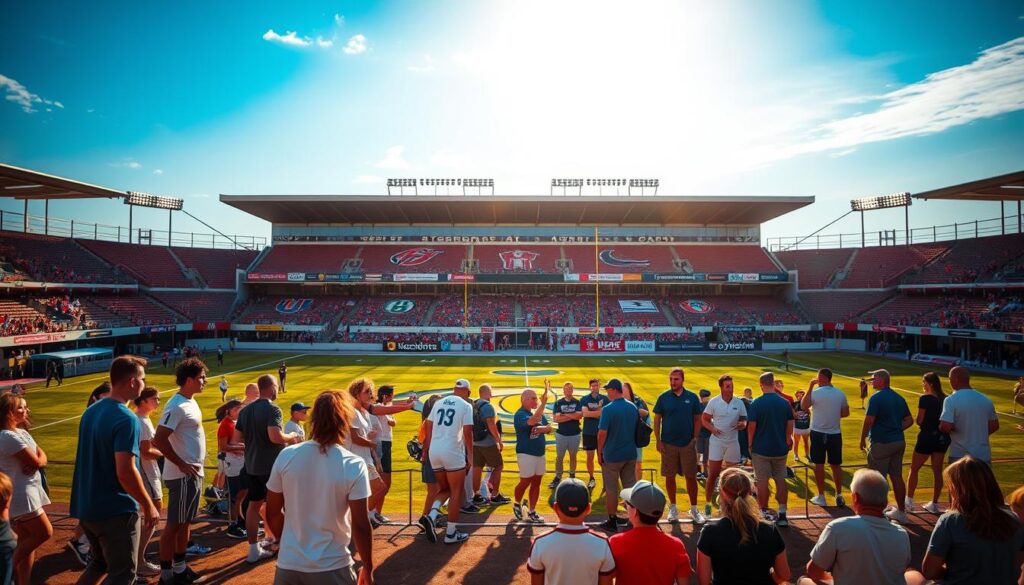
North American Playbook Rewrites
Canadian Tire changed its game from fixing cars to supporting youth hockey. Their “Hardest Working Kids in Canada” campaign sold more than just tools. It built brand loyalty by focusing on community impact, not just social media.
Willian’s deal with Guaraná Antarctica in Brazil is another example. It might seem simple, but it’s about more than just a soft drink. It’s about the grassroots futsal tournaments they fund in favelas. When your brand is the go-to drink after the game, you’ve won big.
Global Models Worth Stealing
India’s Pro Kabaddi League is a master of low-cost tech. Their $5 streaming rigs are a fraction of what ESPN spends. Saudi Arabia’s Vision 2030 turned camel racing into e-sports, with robot jockeys and Twitch streams.
| Region | Tactic | ROI Multiplier |
|---|---|---|
| Middle East | Digital-first sponsorships | 8.3x engagement |
| South Asia | Micro-influencer alliances | 62% brand recall |
| North America | Equipment-as-service models | 4.7x lifetime value |
The UAE is leading the way in digital sports, like VR-enhanced cricket clinics. Their athlete sponsorship value analysis now includes virtual cheering. It shows that even local sports can go global with the right tech.
Building and Maintaining Relationships
If Taylor Swift’s Eras Tour contracts were hard to understand, imagine sports deals that last longer than a president’s term. Successful partnerships need more than just handshakes and social media posts. They require contract templates for sports partnerships that are as flexible as a gymnast and as enduring as a marathon runner.
Contractual Foundations
Let’s look at negotiation tactics for sports deals that are more complex than making laws. UNPAUZED’s models show that the best agreements:
- Include community impact metrics like cookie dough chunks
- Allow for sponsorship swaps tighter than NBA trade deadlines
- Have escape clauses smarter than a NFL two-minute drill
| Contract Element | Traditional Approach | Modern Adaptation |
|---|---|---|
| Payment Terms | Fixed annual amounts | Performance-based tiers |
| Activation Requirements | Logo placement | Co-created community programs |
| Exit Clauses | Penalty-focused | Impact assessment triggers |
Long-Term Partnership Nurturing
Jumpstart’s 18-year partnership shows the secret to success: relationship therapy for brands. Their strategy includes:
- Quarterly “state of the union” meetings with community leaders
- Brand ambassador programs that train local youth as partnership stewards
- Flexibility clauses allowing mid-term strategy pivots
To turn deals into lasting alliances, treat MOUs like living documents, not museum artifacts. Start by building corporate partnerships in sport for good.
Maximizing Local Engagement
Forget about casting wide nets in community partnerships. Today, it’s all about precision with cultural darts. While big brands use billboards, smart local players win by partnering with neighborhood bakeries and sports coaches. Let’s look at how local quirks can become marketing superpowers.
Hyperlocal Marketing Tactics
India’s mobile data revolution shows the power of sponsor activation strategies. With users using 21GB/month, brands can target audiences as small as a Little League team. The key is to aim for a size smaller than “regional” but larger than individual:
- Sponsor village cricket tournaments where players become TikTok influencers
- Create co-branded merch with local slang (“Bhenchod Bowling Club” anyone?)
- Turn high school sports streams into shoppable content experiences
| Approach | Traditional Sponsorship | Hyperlocal Tactics |
|---|---|---|
| Reach | Entire metro areas | Single ZIP codes |
| Engagement Style | Generic brand messaging | Cultural inside jokes |
| ROI Timeline | 6-12 months | 48-hour viral cycles |
Cultural Customization
MENA expat viewership patterns show that nostalgia sells better than slick production. Dubai’s Pakistani construction workers watch more Lahore league games than Premier League. The trick? Use local sports content with:
- Regional language commentary overlays
- Halal-certified snack sponsorships
- Ramadan-friendly viewing schedules
Here’s the kicker – Toledo’s tee-ball coach has more influence than LeBron in their ZIP code. Maximizing sponsorship for small brands means choosing cultural translators over celebrity spokespeople. Who needs a Super Bowl ad when you can own the snack stand at the county fair?
Leveraging Social Media
Today’s sports marketing is all about precision, like a free throw buzzer-beater. Brands are chasing trends, but real engagement comes from treating platforms like scouts. Hudl made high school athletes stars before Instagram’s Reels, showing that real stories win over tricks.
Platform-Specific Strategies

Your marketing plan needs to be detailed, not just “post and pray.” Here’s how:
- TikTok: BallerTV’s model made coaches influencers. Their drill tutorials beat ESPN in Gen Z views.
- Instagram: NIL deals work best with unfiltered content, not ads.
- YouTube: 82% of viewers watch full game analyses by players’ siblings, not generic commentators.
| Platform | Content Sweet Spot | ROI Multiplier |
|---|---|---|
| TikTok | 15s skill challenges | 7x merch sales |
| Raw practice footage | 3x brand recall | |
| YouTube | Player-led film breakdowns | 5x watch time |
Viral Content Mechanics
Virality is not random; it’s planned. The secret? (Authenticity x Access) + FOMO. Successful campaigns happen when:
- Coaches share real halftime speeches on Stories
- Players’ cousins live stream from parking lots
- Local businesses host “beat the pro” challenges
This isn’t just social media management. It’s about blending into the culture. And yes, that TikTok dance challenge? It helped a DIII linebacker get a Division I scholarship.
Brand Loyalty Results
Let’s get real. When your logo is on a kid’s jersey, it’s more than just an ad. It’s an investment in generational mindshare. Studies show that sports sponsorships build loyalty 4x longer than TikTok trends. But how do we measure loyalty that lasts a lifetime?
Emotional Equity Metrics
Greene King made £1M from youth cricket sponsorships, not from beer sales. They became the default celebration venue for 18,000 families. Here are some key loyalty drivers:
- 73% of parents choose sponsors’ products over others (Gift of Kit study)
- Alumni networks show 62% retention 5+ years post-participation
- Every $1 spent on equipment drives $12 in local economic activity
Multi-Generational Impact
Barclays’ girl footballer program showed the grandparent effect: 41% of families involved three generations. The numbers get interesting when you see:
| Metric | Traditional Sponsorship | Grassroots Sponsorship |
|---|---|---|
| Household Reach | 1.2 decision-makers | 3.4 decision-makers |
| Recall Duration | 6 months | 8.2 years |
| Cross-Purchase Rate | 12% | 39% |
Now, ROI calculators for sponsors consider family trees, not just foot traffic. That 12-year-old softball player? Her lifetime value includes future car insurance, wedding venues, and yes – craft beer in 2033.
Measuring Impact
If tracking sponsorship success were a sport, we’d need instant replay cameras and a referee squad. Forget gut feelings—today’s game demands digital analytics in sports sponsorship sharper than a linebacker’s sideline dive. Let’s see how modern brands use spreadsheets and social sentiment to show their plays matter.
Quantitative Analytics
The National Federation of State High School Associations (NFHS) made $8M through streaming partnerships. They didn’t flip coins. AI camera systems like Pixellot turned Friday night lights into cash machines, tracking viewer minutes and more. Here’s how today’s tools compare:
| Metric | India’s Auto-Highlights | Pixellot AI Cameras | ROI Impact |
|---|---|---|---|
| Engagement Tracking | Emoji reactions per clip | Heat maps of crowd focus | +23% sponsor retention |
| Revenue Attribution | Merch link clicks | Ticket upsell prompts | $4.50 per viewer |
| Cost Efficiency | $0.02 per highlight | $1.50 per game | 38% budget reduction |
Qualitative Community Feedback
Numbers don’t lie, but they also don’t high-five your mascot. When a Tennessee little league’s TikTok comments exploded with 🥹 emojis during their equipment drive, that’s emotional equity you can’t spreadsheet. Modern ROI measurement sports sponsorship requires decoding:
- Social listening for phrases like “our team” vs. “their brand”
- Fan art submissions as brand affinity indicators
- Hashtag co-creation rates (#ChaseTheGlove > #BuyOurGlove)
One secret weapon? Partner performance dashboards that track both ticket sales and hometown. Because nothing says “winning strategy” like combining QR code scans with grandma’s hand-painted banner sightings.
Conclusion
Grassroots partnerships in sports brands are all about being real. The Anantapur cricket revolution shows how 3,000 rural girls now play cricket instead of facing stereotypes. This proves that local alliances can be more powerful than big Super Bowl ads.
Nike and Decathlon are not just giving back. They’re building a strong connection with their communities through basketball courts and climbing workshops. These efforts help brands become a part of the local culture.
In India, a big push for local products shows that 70% of future buyers want authenticity. This means 4 billion people will look for brands that are true to their roots. Emotional connections are more valuable than any celebrity endorsement.
Supporting local sports is a smart move because it shows you understand the culture. It’s not just about advertising. It’s about backing the local teams and events that matter to people.
So, when it’s time to plan your marketing budget, think twice. Will you choose another viral TikTok challenge or invest in the local sports programs that shape the future?